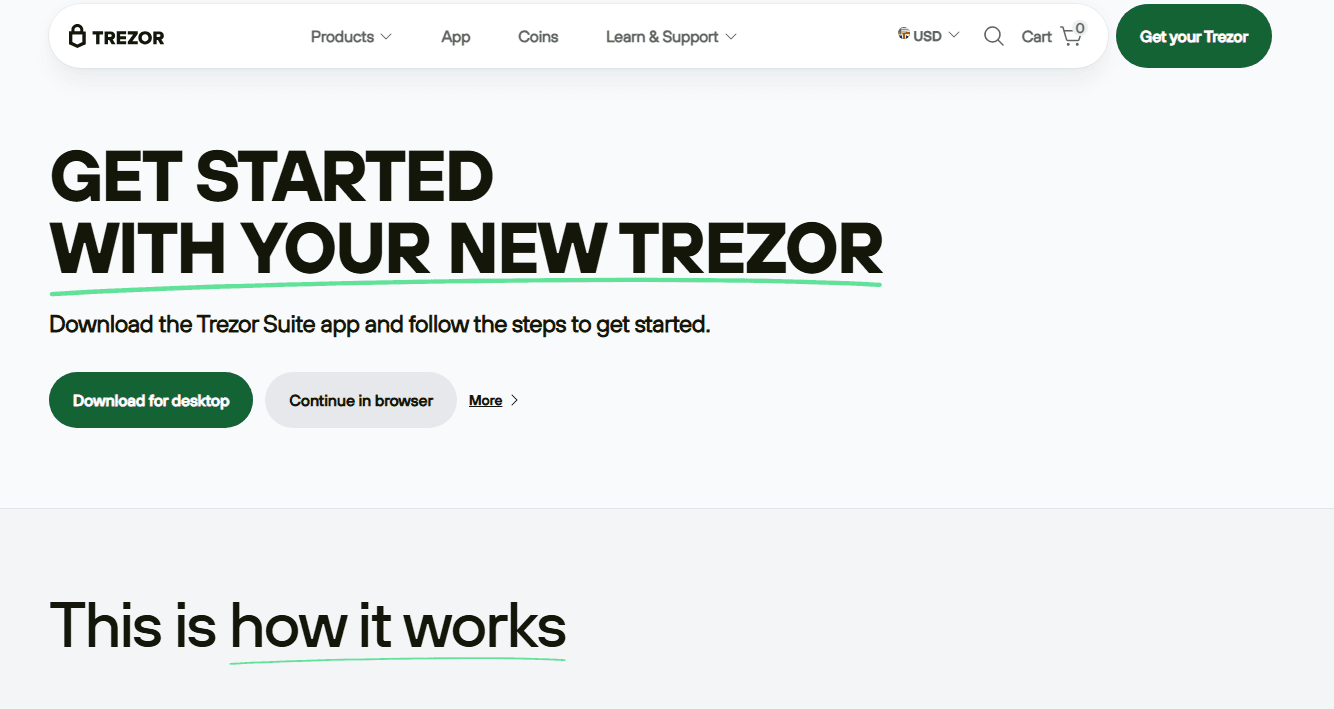
Trezor.io/Start: Complete Guide to Setting Up and Using Your Trezor Wallet
Cryptocurrency security is more important than ever, and hardware wallets like Trezor provide one of the safest ways to store your digital assets. The official Trezor.io/start portal is designed to guide users through the process of initializing their wallet, installing Trezor Suite, and managing their cryptocurrency securely. This guide walks you through every step from unboxing to advanced security features.
What is a Trezor Wallet?
A Trezor wallet is a hardware cryptocurrency wallet that stores your private keys offline, protecting your digital assets from online threats like hacks, malware, and phishing attacks. Unlike software wallets, Trezor provides cold storage, ensuring your funds are secure even if your computer is compromised.
Popular Trezor Models:
Trezor One: Entry-level wallet with basic features.
Trezor Model T: Advanced wallet with a touch screen and enhanced security features.
Key Features:
Secure offline storage of private keys
PIN protection and optional passphrase
Compatibility with over 1,600 cryptocurrencies
Recovery seed for wallet restoration
Integration with Trezor Suite for portfolio management
Why Use Trezor.io/start?
The Trezor.io/start page is the official starting point for setting up your Trezor wallet. Using this portal ensures that you download authentic Trezor Suite software and follow legitimate setup instructions.
Benefits of Using the Official Start Page:
Safe download of Trezor Suite
Step-by-step setup instructions
Guidance for creating and securing recovery seeds
Instructions for firmware updates and device verification
Support for both beginners and experienced crypto users
Starting with Trezor.io/start minimizes security risks and ensures a smooth setup process.
Unboxing Your Trezor Device
Before setting up your wallet, carefully unbox your Trezor device. Make sure the packaging is intact and untampered.
Inside the Box:
Trezor hardware wallet
USB cable for connecting the device
Recovery seed cards
Quick start guide
Always verify the tamper-evident seal. Do not use the device if the seal appears broken, as it may indicate a compromised product.
Step 1: Connect Your Trezor Device
Visit Trezor.io/start on your computer or mobile device.
Download the latest version of Trezor Suite for your operating system (Windows, macOS, Linux).
Connect your Trezor device using the supplied USB cable.
Once connected, Trezor Suite will recognize your device and guide you through the setup process.
Step 2: Initialize Your Wallet
Initialization involves creating a secure wallet for your cryptocurrencies.
Options During Initialization:
Create a new wallet: Generate a brand-new wallet with a new recovery seed.
Recover an existing wallet: Restore a wallet using an existing recovery seed.
During setup, you will also create a PIN code. This PIN protects your wallet from unauthorized access and should be memorized securely.
Step 3: Backup Your Recovery Seed
The recovery seed is a 24-word phrase that allows you to restore your wallet if your device is lost, stolen, or damaged.
How to Backup Your Recovery Seed:
Write the recovery seed on the provided recovery card.
Store it in a safe, offline location.
Never take photos or store the seed digitally.
Your recovery seed is the most critical security element. Anyone with access to it can control your funds.
Step 4: Install Trezor Suite
Trezor Suite is the official application for managing your Trezor wallet and cryptocurrencies.
Installation Steps:
Download Trezor Suite from Trezor.io/start.
Install the software on your computer or mobile device.
Launch Trezor Suite and connect your device.
Trezor Suite Features:
Portfolio overview for multiple cryptocurrencies
Send and receive crypto safely
Firmware update management
Access advanced security features
Step 5: Update Firmware
Firmware updates are essential for security and performance.
Steps to Update Firmware:
Trezor Suite automatically checks for updates.
Follow the prompts to install the latest firmware.
Do not disconnect the device during the update.
Regular firmware updates protect your wallet from vulnerabilities and ensure smooth operation.
Step 6: Add Cryptocurrencies
Trezor supports a wide range of cryptocurrencies, including:
Bitcoin (BTC)
Ethereum (ETH)
Litecoin (LTC)
Tether (USDT)
Thousands of other coins and tokens
You can manage all your assets in a single, secure interface using Trezor Suite.
Step 7: Send and Receive Cryptocurrencies
Trezor ensures secure transactions by requiring confirmation on the hardware device.
To Receive Crypto:
Open Trezor Suite and select Receive.
Copy your wallet address.
Share it with the sender.
To Send Crypto:
Open Trezor Suite and select Send.
Enter the recipient address and amount.
Confirm the transaction on your Trezor device.
This manual confirmation adds an extra layer of protection against unauthorized transactions.
Advanced Security Features
Trezor provides several advanced security options:
Passphrase Protection: Adds an extra word to your recovery seed for enhanced security.
Multisignature Wallets: Requires multiple approvals to authorize transactions.
U2F Authentication: Can be used as a two-factor authentication (2FA) device.
These features are recommended for users with large cryptocurrency holdings or those seeking maximum protection.
Common Issues and Troubleshooting
During setup, you might encounter minor issues:
Device not detected: Check the USB connection or try a different port.
Browser warnings: Use only Trezor Suite or official websites.
Firmware update errors: Restart the process if interrupted.
The Trezor.io/start page provides detailed troubleshooting guides to resolve common issues.
Best Practices for Wallet Security
Never share your PIN or recovery seed.
Keep your recovery seed offline.
Regularly update Trezor Suite and firmware.
Enable passphrase protection.
Consider multisignature wallets for larger amounts.
Adhering to these practices ensures long-term security of your cryptocurrency.
Conclusion
Trezor.io/start is the official starting point for securing and managing your cryptocurrency with a Trezor wallet. From unboxing and initialization to recovery seed backup, firmware updates, and asset management, the setup process emphasizes security, ease of use, and reliability.
By following the official instructions, both beginners and advanced users can confidently manage their digital assets. Remember, your Trezor wallet is more than a device—it is the key to safely controlling and protecting your cryptocurrency investments.